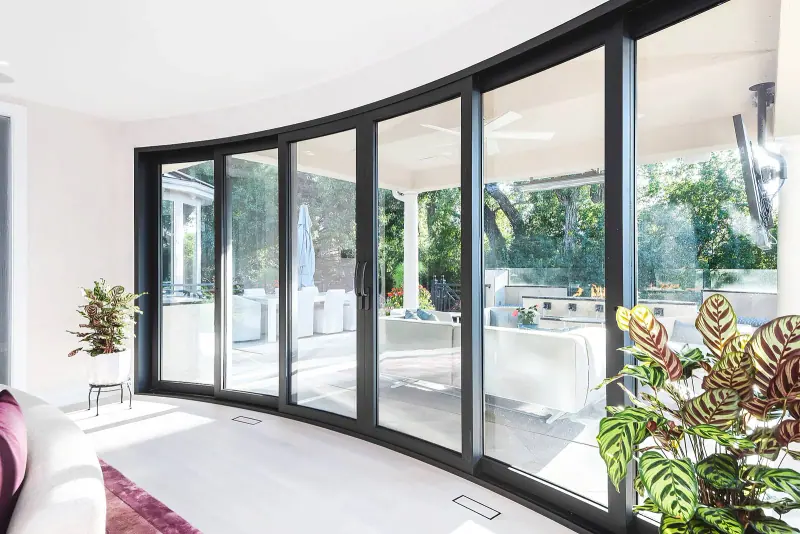
Explore material and finish options while planning commercial submittals. Match the final selection to your model and approved project quote.
Material & finish planningAutomated Multi-Slide, SummitVoyage Collection, IBS 2024Use This Guide on a Real Project
Apply Premium Upgrades to marked elevations, opening schedules, details and specifications rather than a nominal window size. Collect field dimensions, photographs, wall sections, glass and finish requirements, performance criteria, bid dates, delivery constraints and installation responsibility.
Keep System Decisions Connected
Frame depth, module, mullion spacing, glass size and weight, operable vents, hardware, anchors, drainage, thermal breaks, finish and perimeter conditions affect one another. Keep the selected approach in one project record so a late change does not invalidate an earlier calculation or detail.
Coordinate the Building Enclosure
Review how the window or facade connects to structure, sheathing, air barrier, water-resistive barrier, flashing, insulation, vapor control, cladding, interior finishes and perimeter fire containment. Mark continuity at heads, sills, jambs, intermediate anchors and transitions between systems.
Confirm the Final Scope
Before release, verify opening marks, quantities, dimensions, system, glass, finish, hardware, screens, panels, anchors, perimeter materials, testing, engineering, submittals, crates, freight, unloading and installation responsibility. Record alternates and exclusions in language the project team can price and administer.
Select upgrades by opening condition
Begin with the function of each opening rather than adding every available accessory to the package. An occupied commercial building may prioritize daily operation, access control, ventilation or cleaning access. A large moving panel may raise different questions about hardware, structural support or powered operation. Identify which requirement an upgrade is intended to satisfy, then review its compatibility with the selected system and opening size. Availability varies by assembly. The final quote and approved submittal should identify the accepted option, its extent and any installation or electrical work that needs separate coordination.
Keep glass selections explicit
An upgraded glass package should be described by its actual makeup and the project requirement it addresses. Low-emissivity coatings, acoustic configurations, laminated glass and insulating units are different choices with different purposes. Record lite thicknesses, overall thickness, coatings and safety-glazing criteria when known. Avoid treating a general marketing name as a complete specification. If an existing assembly is being reglazed, confirm that the replacement glass is compatible with its frame, glazing pocket and support conditions. Provide available drawings or labels so the glass request can be reviewed with the existing construction.
Coordinate hardware and building interfaces
Screens, automation, locks and other operating accessories depend on how the system is used and installed. Confirm the relevant panel arrangement, handing, clearances and access. Powered components may require electrical provisions, controls or coordination with other building systems. Review who supplies and installs each interface so the opening package remains clear. Finish selections should also be tied to the actual frame and hardware components rather than judged solely from a screen color. Record any sample or mockup requirements in the pricing request so they can be addressed before release.
Request the base scope and alternates together
When an upgrade is still under consideration, request it as a defined alternate to a clear base package. This makes it easier to compare the cost and scope of the decision without losing the accepted quantities or dimensions. Identify the opening marks affected and whether the alternate applies to every unit or only selected locations. Upload the relevant plan sheets, specifications or materials list with the request. Before ordering, confirm the chosen option in the written quote and approved documents. Maintenance requirements and operating instructions should remain with the final opening record for future service.